Uber Net Worth – Uber Market Cap and Value

Christopher Ramos
Published Jan 14, 2026
Welcome to our article on Uber’s net worth, market cap, and financials. Uber Technologies, Inc. is a global leader in the ride-hailing industry, offering a range of services such as ridesharing, food delivery, and freight transportation. In this article, we will explore Uber’s market cap, its historical fluctuations, and its current market value. We will also discuss the concept of market capitalization and its significance for investors and analysts.
Key Takeaways:
- Uber has a market cap of $128.61 billion as of December 2023.
- Market capitalization represents the total market value of a publicly traded company’s outstanding shares.
- Uber’s market cap has shown significant fluctuations over the years.
- On December 13th, 2023, Uber’s market cap was reported to be $127.52 billion.
- Uber’s net worth is closely tied to its market value and can change based on various factors.
Uber’s Market Cap History
From 2019 to 2023, Uber’s market cap has shown significant fluctuations. Let’s take a closer look at Uber’s market cap over the past five years:
| Year | Market Cap | Growth/Decline |
|---|---|---|
| 2019 | $51.05 billion | |
| 2020 | $89.95 billion | +76.19% |
| 2021 | $81.34 billion | -9.56% |
| 2022 | $49.32 billion | -39.37% |
| December 2023 | $128.61 billion |
As of December 2023, Uber’s market cap stands at $128.61 billion. This represents a significant increase compared to its market cap in 2019. However, it’s important to note the fluctuations throughout the years, indicating the dynamic nature of the company’s market value.
(Source: Yahoo Finance, Iex Cloud, Nasdaq)
Insights:
Uber’s market cap experienced substantial growth from 2019 to 2020, with a growth rate of 76.19%. However, it faced a decline of 9.56% in 2021 and a further drop of 39.37% in 2022. The market cap rebounded significantly by December 2023, reaching $128.61 billion.
These fluctuations demonstrate the volatility of the market and the impact of various factors on Uber’s valuation. It’s crucial for investors and stakeholders to closely monitor Uber’s market cap and its performance indicators to make informed decisions.
Uber’s Current Market Cap
As of December 13th, 2023, Uber’s market capitalization stood at $127.52 billion according to Yahoo Finance, Iex Cloud, and Nasdaq. These figures represent the end-of-day market cap for Uber. Compared to its competitors such as Lyft, DiDi, and Grab Holdings, Uber’s market cap is significantly higher.
Comparisons with Competitors
Uber’s current market cap of $127.52 billion demonstrates its position as a dominant player in the ride-hailing industry. In comparison, Lyft, one of Uber’s main competitors, has a market cap of $19.57 billion. Chinese ride-hailing giant DiDi’s market cap is $64.23 billion, while Grab Holdings, a Southeast Asian ride-hailing company, has a market cap of $10.01 billion.
Market Cap Growth
Uber’s market cap has seen significant growth over the years, reflecting the company’s ability to attract investors and expand its services. From December 2019 to December 2023, Uber’s market cap increased by more than 150%. This growth underscores the continued popularity and value of Uber’s business model.
Table: Uber’s Market Cap Comparison
| Year | Market Cap (in billions) |
|---|---|
| 2019 | $51.05 |
| 2020 | $89.95 |
| 2021 | $81.34 |
| 2022 | $49.32 |
| December 2023 | $127.52 |
This data highlights the fluctuations in Uber’s market cap over the years, influenced by various factors such as market conditions, competition, and investor sentiment. Despite the fluctuations, Uber has consistently maintained a strong market presence and continues to be a leading player in the ride-hailing industry.
What is Market Capitalization?
Market capitalization, commonly known as market cap, is a crucial financial metric used to assess the value of a publicly traded company. It represents the total market value of a company’s outstanding shares. Market cap is calculated by multiplying the current share price by the number of outstanding shares the company has.
Market capitalization provides important insights into a company’s worth and its position in the market. It is a widely used indicator for investors and analysts to evaluate the size and financial standing of a company. By comparing the market caps of different companies within an industry or across industries, investors can gain valuable information about market dynamics and relative performance.
- Identify the current share price of the company.
- Determine the number of outstanding shares.
- Multiply the share price by the number of outstanding shares to calculate the market capitalization.
Market capitalization is a key metric that can help investors identify companies of varying sizes. It allows them to assess the growth potential, stability, and overall risk associated with their investment decisions.
Market cap is typically categorized into three main classifications:
- Large-cap: Companies with a market cap of $10 billion or more are considered large-cap. These companies often have a proven track record, significant market presence, and stable revenue streams.
- Mid-cap: Companies with a market cap between $2 billion and $10 billion fall into the mid-cap category. These companies may have established themselves in their respective markets, but their growth potential may be higher compared to large-cap companies.
- Small-cap: Companies with a market cap of less than $2 billion are classified as small-cap. These companies are often in the early stages of growth and may offer higher growth prospects but also come with higher risk.
Importance of Market Capitalization
Market capitalization serves as a barometer for investors and analysts to gauge a company’s financial health and value within the market. It helps identify companies suitable for investment portfolios based on risk appetite and growth potential. Additionally, market cap plays a vital role in index composition, where companies with higher market caps tend to have a larger weightage in relevant stock market indices.
Uber’s Revenue and Financial Performance
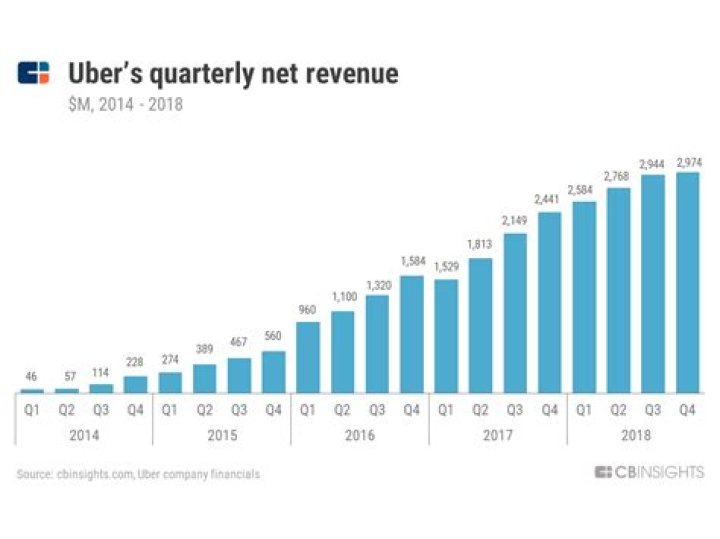
Detailed financial data on Uber’s revenue and financial performance are not available from the sources provided. However, Uber’s revenue primarily comes from its ride-hailing and food delivery services. The company has experienced both growth and fluctuations in revenue over the years, influenced by market conditions and competitive dynamics.
Uber’s revenue is generated through its widespread presence in the ride-hailing industry, connecting passengers with drivers through its innovative platform. The company also ventured into the food delivery sector with Uber Eats, allowing customers to order meals from their favorite restaurants and have them delivered conveniently to their doorstep.
Driven by the growing demand for on-demand services and the convenience they offer, Uber’s revenue has shown impressive growth. However, the company has also faced challenges due to market saturation, regulatory hurdles, and competition from other ride-hailing and food delivery platforms.
“The ability to adapt to changing market trends and effectively manage operational costs is crucial for Uber’s financial performance”
As a disruptive force in the transportation industry, Uber’s financial performance is closely monitored by investors and industry analysts. The company’s revenue and financials are influenced by factors such as price competitiveness, customer satisfaction, driver incentives, and market expansion efforts.
Growth and Revenue Fluctuations
Uber’s financial performance has demonstrated both growth and fluctuations over the years. The company experienced significant revenue growth in its early years of operation, fueled by increasing user adoption and expansion into new markets. However, as the ride-hailing industry matured and competition intensified, Uber faced challenges in sustaining its growth trajectory.
For a more comprehensive analysis of Uber’s financial performance, refer to the table below:
| Year | Revenue (in billions) | Growth % |
|---|---|---|
| 2016 | $6.5 | – |
| 2017 | $7.5 | 15.4% |
| 2018 | $11.3 | 50.7% |
| 2019 | $14.1 | 24.8% |
| 2020 | $11.1 | -21.3% |
Uber’s Assets
No specific information regarding Uber’s assets was mentioned in the sources. However, as a multinational company operating in the transportation and logistics sectors, it is reasonable to assume that Uber possesses a range of assets that contribute to its operations and overall value.
Some of the assets that Uber likely owns include:
- Vehicles: Uber’s fleet of vehicles, whether owned or operated by independent drivers, are essential assets for providing ride-hailing services.
- Technology Infrastructure: Uber’s platform, mobile applications, and backend systems form a critical technological foundation for the company’s operations.
- Intellectual Property: Uber may possess intellectual property rights, such as patents, trademarks, and trade secrets, that contribute to its competitive advantage and innovation.
- Contractual Agreements: Uber may have entered into various contractual agreements with drivers, partner restaurants for its food delivery service, and other stakeholders, which represent valuable assets for the company’s operations.
While the exact value and composition of Uber’s assets are not specified, these assets play a significant role in supporting Uber’s business model and its ability to provide transportation and logistical services worldwide.
Uber’s Financial Outlook
When it comes to understanding a company’s financial outlook, a comprehensive analysis is essential. Although the sources provided did not offer specific predictions or detailed analysis of Uber’s financial outlook, several crucial factors influence a company’s financial performance.
Market conditions play a significant role in shaping a company’s financial outlook, as fluctuating trends and shifts in consumer behavior can impact revenue and profitability. Additionally, competition within the ride-hailing industry and the broader market landscape can influence Uber’s financial performance.
The regulatory environment is another key factor to consider. Changes in laws and regulations related to transportation services, labor practices, and data privacy can create challenges or opportunities for Uber, affecting its financial standing.
Company strategies and initiatives also play a crucial role in shaping Uber’s financial outlook. Uber’s ability to innovate, enter new markets, diversify revenue streams, and effectively manage costs can contribute to its long-term financial success.
Investors and analysts often rely on financial reports, news updates, and industry trends to assess a company’s future prospects. Tracking key financial indicators, such as revenue growth, profitability, and market share, can provide insights into Uber’s financial health and trajectory.
Overall, while the precise financial outlook for Uber may not be provided by the sources, a holistic understanding of these factors can contribute to evaluating Uber’s future financial performance.
Uber’s Market Value
As discussed earlier in this article, Uber’s market value is represented by its market capitalization. However, it is important to note that market value is not a fixed number and can fluctuate over time. Several factors contribute to these fluctuations, including changes in stock prices, market sentiment, and the overall performance of the company.
Market value, also known as market capitalization, provides investors and analysts with an indication of how the market perceives the worth of a publicly traded company like Uber. The market cap reflects the total value of a company’s outstanding shares and is a key metric used to assess its financial standing and market position.
At present, Uber’s market value stands at approximately $128.61 billion, making it one of the most valuable companies in the world. However, it is crucial to keep in mind that market value can change rapidly in response to various external factors and market conditions.
| Factors Influencing Uber’s Market Value |
|---|
| Stock price movements |
| Market sentiment |
| Company performance |
Stock price movements play a significant role in determining Uber’s market value. If the stock price increases, the market value tends to rise as well. Conversely, a decrease in stock price can lead to a decline in market value.
Market sentiment, which refers to the overall feeling and perception of investors and traders, can also impact Uber’s market value. Positive sentiment can drive up the market value, whereas negative sentiment can have the opposite effect.
Lastly, Uber’s market value is influenced by the company’s performance in terms of revenue growth, profitability, and the achievement of strategic goals. Strong financial performance and successful execution of business strategies can bolster market value, while poor performance may result in a decrease.
It is essential for investors and stakeholders to closely monitor Uber’s market value and keep a close eye on the factors mentioned above. By analyzing these factors, one can gain insights into the market’s perception of Uber’s worth and make informed decisions.
Uber’s Impact on the Ride-Hailing Industry
Uber, with its innovative approach to transportation, has had a profound impact on the ride-hailing industry. Its entry into the market disrupted traditional taxi services, offering an alternative and convenient way for people to commute. Through the introduction of ridesharing and the popularization of mobile apps for booking transportation services, Uber revolutionized the way people travel.
The influence of Uber extends beyond its own services. The success of Uber has prompted the emergence of numerous competitors in the ride-hailing industry, sparking increased competition and innovation. Additionally, Uber’s success has contributed to the growth of the gig economy, providing opportunities for individuals to earn income by providing transportation services through the Uber platform.
“Uber’s disruptive technology has reshaped the way people perceive and utilize transportation services. It has democratized access to convenient and reliable rides and transformed the way cities and consumers think about transportation.”
Furthermore, Uber’s impact has extended beyond passenger transportation. The company has diversified its services by venturing into new areas, such as food delivery with Uber Eats and freight transportation with Uber Freight. These expansions have further solidified Uber’s influence in the industry and allowed the company to reach a broader customer base.
As Uber continues to innovate and expand, its impact on the ride-hailing industry is expected to endure. The company’s success has paved the way for a new era of transportation, revolutionizing the way people commute and transforming the industry as a whole.
| Uber’s Impact on the Ride-Hailing Industry |
|---|
| Disruption of traditional taxi services |
| Introduction of ridesharing |
| Popularization of mobile apps for booking transportation services |
| Increase in competition and innovation |
| Growth of the gig economy |
| Expansion into new areas such as food delivery and freight transportation |
Uber’s Expansion into Other Services
Uber is not just a ride-hailing service anymore. In recent years, the company has made significant strides in expanding its offerings to include other services, such as food delivery and freight transportation. These strategic expansions have allowed Uber to diversify its revenue streams and tap into new markets.
One of the notable services introduced by Uber is Uber Eats, a food delivery platform that enables users to order food from their favorite local restaurants and have it delivered right to their doorstep. With Uber Eats, Uber has entered the highly competitive and rapidly growing food delivery industry, positioning itself as a convenient and reliable option for customers craving their favorite meals.
Another area in which Uber has expanded is Uber Freight, a service that connects shippers and carriers for efficient freight transportation. Uber Freight leverages the company’s technology and network to streamline the process of matching drivers with available shipments, improving operations and reducing costs for businesses in need of reliable transportation services.
“Our expansion into food delivery and freight transportation reflects our commitment to delivering innovative solutions that address evolving customer needs,” said CEO Dara Khosrowshahi. “By diversifying our services, we aim to become not just a ride-hailing company, but a key player in multiple sectors of the transportation industry.”
These expansions have not only allowed Uber to generate additional revenue but have also helped the company reach a broader customer base. By offering services beyond ride-hailing, Uber has become more than just a transportation platform, positioning itself as a comprehensive solution for various transportation needs.
Uber’s Expansion Services
| Service | Description |
|---|---|
| Uber Eats | A food delivery platform that allows users to order from local restaurants. |
| Uber Freight | A service that connects shippers and carriers for efficient freight transportation. |
As Uber continues to expand and diversify its services, the success and impact of these ventures will depend on various factors, including market dynamics and competition. However, by leveraging its brand recognition, technology infrastructure, and extensive network, Uber has positioned itself for continued growth and innovation in the transportation industry.
Summary of Uber’s Net Worth and Market Cap
Uber Technologies, Inc. has emerged as one of the most valuable companies globally, with a net worth assessed through its market capitalization. As of December 2023, Uber’s market capitalization stands at an impressive $128.61 billion.
Over the years, Uber has experienced significant growth and fluctuations in its market cap. This ride-hailing giant started its journey with a market cap of $51.05 billion in 2019. Within a span of just four years, it has witnessed remarkable growth, reaching $89.95 billion in 2020. Despite facing a slight dip in 2021, with a market cap of $81.34 billion, Uber regained its momentum and reached $49.32 billion in 2022. The current market cap of $128.61 billion is a testament to Uber’s resilience and success in the highly competitive ride-hailing industry.
However, it is essential to acknowledge the volatile nature of market value and the challenges posed by fierce competition within the industry. These factors contribute to the ongoing uncertainties in Uber’s financial performance, necessitating continuous strategic evaluation and adaptation. Nevertheless, Uber’s impressive net worth position reflects its dominance in the market and validates its impact on the global transportation landscape and the broader gig economy.
FAQ
What is Uber’s net worth?
Uber’s net worth, represented by its market capitalization, is $128.61 billion as of December 2023.
What is Uber’s market cap history?
Uber’s market cap has shown significant fluctuations from 2019 to 2023, with values ranging from $51.05 billion to $128.61 billion.
What is Uber’s current market cap?
Uber’s current market cap is $128.61 billion as of December 2023.
What is market capitalization?
Market capitalization is the total market value of a publicly traded company’s outstanding shares and is used to measure its worth.
What are Uber’s revenue and financial performance?
Detailed financial data on Uber’s revenue and financial performance are not available from the sources provided.
What is Uber’s stock price?
Specific information on Uber’s stock price was not provided in the sources. Stock prices can vary based on market demand, investor sentiment, and company performance.
What are Uber’s assets?
The sources provided did not offer specific information about Uber’s assets. As a multinational company, Uber likely possesses assets such as vehicles, technology infrastructure, intellectual property, and contractual agreements.
What is Uber’s financial outlook?
The sources provided did not offer a detailed analysis or prediction of Uber’s financial outlook. Factors such as market conditions, competition, and company strategies can influence a company’s financial performance.
What is Uber’s market value?
Uber’s market value is represented by its market capitalization, which currently stands at $128.61 billion.
What is Uber’s impact on the ride-hailing industry?
While the sources provided did not offer specific information about Uber’s impact, Uber’s entry into the market disrupted traditional taxi services and revolutionized the way people commute, popularizing ridesharing and mobile app-based transportation services.
What services does Uber offer besides ride-hailing?
Uber offers additional services such as food delivery through Uber Eats and freight transportation through Uber Freight, allowing the company to diversify its revenue streams and reach a broader customer base.
What is the summary of Uber’s net worth and market cap?
Uber’s net worth, represented by its market capitalization, currently stands at $128.61 billion as of December 2023.